Homepage
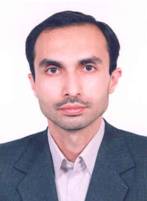
Farid Ashtiani, Ph.D.
Email: ashtianimt@sharif.edu
Tel.: 6616-5924
Address: No. 607, Dept. of Electrical Eng., Sharif University of Technology, Azadi Ave., Tehran, Iran
Academic Experiences
üAssistant Professor at Sharif University of Technology, Department of Electrical Engineering, From 2003 to 2011.
üAssociate Professor at Sharif University of Technology, Department of Electrical Engineering, Since 2011.
Teaching Courses
üProbability and Statistics
ü Principles of Electrical Eng.
üDigital Communications
ü Signals and Systems
ü Theory of Electrical Circuits
üQueueing Theory (graduate course)
üStochastic Modeling in Communication Networks (graduate course)
üGame Theory (graduate course)
ü Digital Communications Lab.
Professional Experiences
n Membership at Advanced Communications Research Institute (ACRI), http://acri.sharif.ir
n Membership at Signal Processing & Multimedia Research Group at ITRC (Iranian Telecommunication Research Center)
n Membership at Advanced Communications Research Lab. at ITRC
n Membership at Mobile Communication Study Group at ITRC
n Project Executive at NRI (Niroo Research Institute)
n Project Executive at MATN (Power Research Center)
Fields of Interest
Ø Analysis of Stable Throughput and Delay for Wireless Communication Networks
Ø Energy Harvesting
Ø Wireless Network Virtualization
Ø Data Offloading and Caching in Wireless Networks
Ø Heterogonous Networks; Resource Allocation
Ø Full-Duplex Communications, MAC Layer Design and Analysis
Ø Analytical Modeling of Cellular Networks, MANETs, VANETs, WMNs, Cognitive Networks, etc.
Ø Traffic Analysis of CDMA and OFDMA Mobile Communication Networks
Ø Cross-Layer Design of Wireless Communication Links
Ø Multimedia Traffic Modeling
Ø Mobility Modeling
Ø Network Coding
Publications
Journal Papers:
[1] F. Ashtiani, J. A. Salehi, and M. R. Aref, " flexible dynamic traffic model for reverse link CDMA cellular networks," IEEE Transaction on Wireless Commun., vol. 1, no. 3, pp. 159-164, Jan. 2004.
[2] F. Ashtiani, J. A. Salehi, and M. R. Aref, "Mobility modeling and analytical solution for spatial traffic distribution in wireless multimedia networks," IEEE J. Select. Areas Commun..vol. 21, no. 10, pp. 1699-1709, Dec. 2003.
[3] F. Ashtiani, M. R. Aref, and J. A. Salehi, "Performance comparison of admission control policies for new calls in soft-handoff regions for CDMA cellular networks," J. Scientia Iranica, vol. 11, no. 3, pp. 193-202, Summer 2004.
[4] E. Karamad and F. Ashtiani, "A modified 802.11-based MAC scheme to assure fair access for vehicle-to-roadside communications," Elsevier Computer Communications, vol. 31, Iss. 12, pp. 2898-2906, 2008.
[5] G. Mohimani, F. Ashtiani, A. Javanmard, and M. Hamdi, "Mobility modeling, spatial traffic distribution, and probability of connectivity for sparse and dense vehicular ad hoc networks," IEEE Trans. Vehicul. Tech, Vol. 58, No. 4, pp. 1998-2007, May 2009.
[6] A. Javanmard and F. Ashtiani, "Analytical evaluation of average delay and maximum stable throughput along a typical two-way street for vehicular ad hoc networks in sparse situations," Elsevier Computer Communications, Vol. 32, Iss. 16, pp. 1768-1780, Oct. 2009.
[7] E. Karamad and F. Ashtiani, "Performance analysis of IEEE 802.11 DCF and 802.11e EDCA based on queueing networks," IET Commun., Vol. 3, Iss. 5, pp. 871-881, 2009.
[8]
N. Etemadi-Rad and F. Ashtiani, "Throughput analysis of IEEE 802.11 based
vehicular ad hoc networks," IET Commun., Vol. 5, Iss. 14, pp.
1954-1963 , 2011.
[9]
A. Sharif-Nassab and F. Ashtiani, "Connectivity analysis of
one-dimensional ad hoc networks with arbitrary spatial distribution for
variable and fixed number of nodes," IEEE Trans. Mobile Computing,
Vol. 11, No. 10, pp. 1425-1435, Oct. 2012.
[10]
M. Moradian and F. Ashtiani, "Analytical modeling of a cognitive IEEE
802.11 WLAN overlaid on a cellular network," IET Communications,
Vol.6, Iss. 15, pp. 2455-2464, 2012.
[11] A. A. Sharifi, F. Ashtiani, H. Keshavarz, and M. Nasiri-Kenari, "Impact of cognition and cooperation on MAC layer performance metrica, part I: maximum stable throughput," IEEE Trans. on Wireless Commun., Vol. 11, No. 12, pp. 4252-4263 , Dec. 2012
[12] M. H. Amerimehr, F. Ashtiani, and S. Valaee, "Maximum Stable Throughput of Network-Coded Multiple Broadcast Sessions for Wireless Tandem Random Access Networks," IEEE Trans. Mobile Computing. Vol. 13, No. 6, pp. 1256-1267, Jun. 2014.
[13] M. H. Amerimehr and F. Ashtiani, "Delay and Throughput Analysis of a Two-Way Opportunistic Network Coding-Based Relay Network," IEEE Trans. Wireless Commun., Vol. 13, No. 5, pp. 2863-2873, May 2014.
[14] M. H. Amerimehr and F. Ashtiani, " Performance analysis of network coding-based content distribution in vehicular ad-hoc networks," IET Communications, Vol. 8, No. 9, Jun. 2014.
[15] F. Sheikholeslami, M. Nasiri-Kenari, and F. Ashtiani, "Optimal Probabilistic Initial and Target Channel Selection for Spectrum Handoff in Cognitive Radio Networks," IEEE Trans. Wireless Commun., pp. 570-584, Jan. 2015.
[16] M. Moradian and F. Ashtiani, "Optimal Relaying in a Slotted Aloha Wireless Network With Energy Harvesting Nodes," IEEE J. Select. Areas Commun., pp. 1680-1692, Aug. 2015.
[17] P. Rahimzadeh and F. Ashtiani, "Analytical Evaluation of Saturation Throughput of a Cognitive WLAN Overlaid on a Time-Scheduled OFDMA Network," IEEE Trans. Mobile Comput., pp. 634-647, Mar. 2017.
[18] M. Moradian and F. Ashtiani, “On the Tradeoff Between Collision and Cooperation in a Random Access Wireless Network with Energy Harvesting Nodes,” IEEE Trans. Vehicul. Tech., Vol. 67, No. 3, pp. 2501-2513, Mar. 2018.
[19] M. Karimzadeh and F. Ashtiani, “A Semi-Myopic Algorithm for Resource Allocation in Wireless Body Area Networks,” IET Wireless Sensor Systems, Vol. 8, pp. 26-35, 2018.
Conference Papers:
[1] F. Ashtiani, J. A. Salehi, M. R. Aref, and M. Nasiri-Kenari, "A new soft-handoff management algorithm with two decision boundaries," in Proc. IEEE PIMRC'01, San Diego, CA, Sep. 2001, pp. D54-D58.
[2] F. Ashtiani, J. A. Salehi, and M. R. Aref, "An algorithm for new originating calls in soft-handoff regions in CDMA cellular networks," in Proc. Intern. Sympos. Telecommun., IST'01, Tehran, Sep. 2001.
[3] F. Ashtiani, J. A. Salehi, and M. R. Aref, "Analytical computation of spatial traffic distribution in a typical region of a cellular network by proposing a general mobility model," in Proc. IEEE ICT'03, Tahiti, Fr, Mar. 2003, pp. 295-301.
[4] F. Ashtiani, J. A. Salehi, and M. R. Aref, "An approximate upper bound for power-control exchange rate in CDMA cellular networks," in Proc. Intern. Sympos. Telecommun., IST'03, Isfahan, Aug. 2003.
[5] A. Seyfi and F. Ashtiani, "Effect of Leaky-Bucket-Based Traffic Shaping on Capacity Enhancement for VSG-CDMA Cellular Networks," in Proc. IEEE WCNC'07, Hong Kong, Mar. 2007, pp. 3695-3699.
[6] M. R. Faghih-Imani and F. Ashtiani, "Interference modeling and generalized static capacity for uplink CDMA cellular networks," in Proc. IEEE ICT'07, Penang, Malaysia, May 2007, pp. 17-22.
[7] A. Seyfi and F. Ashtiani, "Effect of Data Traffic Shaping on Throughput and Delay for VSG-CDMA Cellular Networks," in Proc. IEEE ICT'07, Penang, Malaysia, May 2007 pp. 6-11.
[8] F. Ashtiani, M. Hamdi, and K. Shafiee, "An analytical framework for computation of throughput capacity in multi-hop mobile ad hoc networks," in Proc. IEEE PIMRC'07, Athens, Greece, Sep. 2007, pp. 1-5.
[9]. S. H. Hassani, F. Ashtiani, and P. Tehrani, "Non-saturated mode analysis of IEEE 802.11 MAC protocol," in Proc. IEEE PIMRC'07, Athens, Greece, Sep. 2007, pp. 1-5.
[10] S. Feizi-Khankandi, F. Ashtiani, and S. H. Hassani, "Modeling the behavior of contending opportunistic cognitive radios," in Proc. IEEE ICSPC07, pp. 720-723.
[11] Abouzar Ghavami and Farid Ashtiani, "A new cross layer design of adaptive modulation and coding in finite buffer wireless links," in Proc. IEEE FGCN'07, Jeju-Island Korea 2007, pp. 498-503.
[12] Soheil Feizi-Khankandi and F. Ashtiani, "Lower and upper bounds for throughput capacity of a cognitive ad hoc network overlaid on a cellular network," in Proc. IEEE WCNC'08, pp.2759-2764 .
[13] Abouzar Ghavami and Farid Ashtiani, "Cross-layer optimization of queuing with adaptive modulation and coding preserving packet average delay time," in Proc. IEEE Globecom' 08, pp.1-5.
[14] Hamed Nasrabadi and Farid Ashtiani, "Improving coverage-capacity tradeoff and power consumption of TDMA-CDMA by coverage-dependent timeslot allocation," in Proc. IEEE WiMob' 08, pp. 266-271.
[15] Fatemeh Hamidi-Sepehr and Farid
Ashtiani, "An
analytical model for evaluation of wireless mesh networks," in Proc.
IST'08, Tehran, 2008, pp. 295-300.
[16] M. B. Iraji, M. H. Amerimehr and F. Ashtiani, "A queueing model for wireless tandem network coding," in Proc.IEEE WCNC'09, Budapest, Mar. 2009, pp. 1-6.
[17] M. Ghaffari and F. Ashtiani, "A new routing algorithm for sparse vehicular ad-hoc networks with moving destinations," in Proc. IEEE WCNC'09, Budapest, Mar. 2009, pp. 1-6.
[18] M. H. Amerimehr, M. B. Iraji, and F. Ashtiani, "An analytical approach for throughput evaluation of wireless network coding," in Proc. IEEE ICC'09, Dresden, Jun. 2009, pp. 1-5.
[19] S. Sahraei and F. Ashtiani, "Effect of power randomization on saturation throughput of IEEE 802.11 WLAN," in Proc. IEEE ICC'10, Cape Town, May 2010, pp. 1-5.
[20] A. Kazerooni and F. Ashtiani, "Effect of the traffic-load dependent vehicle routing algorithm on the connectivity in VANETs," in Proc. IEEE VTC'11, Budapest, May 2011, pp 1-5.
[21] A. Kenarsari-Anhari and F. Ashtiani, "Throughput enhancement of IEEE 802.11e WLAN by transmission power randomization," in Proc. IEEE VTC'11, Budapest, May 2011, pp 1-5.
[22] M. Moradian and F. Ashtiani, "Throughput analysis of a cognitive IEEE 802.11 WLAN sharing the downlink band of a cellular network," in Proc. IEEE ICC'11, Kyoto, June 2011.
[23] F. Farhadi and F. Ashtiani, "Throughput enhancement of a random access WLAN by combination of digital and analog network coding," in Proc. IEEE ICC'11, Kyoto, June 2011.
[24] H.
Soleimani and F. Ashtiani, "Throughput analysis of a cognitive multi-hop
IEEE 802.11-based WLAN overlaid on a cellular network," in Proc. IEEE
SoftCom'11, Split, Croatia, 2011.
[25] M. Moradian and F. Ashtiani,
"Throughput analysis of a slotted Aloha-based network energy harvesting nodes,"
in Proc IEEE PIMRC, Sydney, 2012, pp. 351-356.
[26] P. Rahimzadeh, M. Moradian,
and F. Ashtiani, "Saturation throughput analysis of a cognitive IEEE
802.11-based WLAN overlaid on an IEEE 802.16e WiMAX," in Proc.IEEE
PIMRC, Sydney, 2012, pp. 1515-1520.
[27] M.A. Nazari and F. Ashtiani, "Stable throughput analysis for a cooperative WLAN with primary and secondary users," in Proc. IST'2012, Tehran, 2012, pp. 535-540.
[28] F. Farhadi and F. Ashtiani, "A Network Coding-Based Packet Forwarding Schemefor Unicast Random Access Networks with Exponential Backoff," in Proc. IWCIT'13, Tehran, May 2013.
[29] M. Moradian, and F. Ashtiani, "Sum Throughput Maximization in a Slotted Aloha Network with Energy Harvesting Nodes," in Proc. IEEE WCNC'2014, Istanbul, pp. 1608-1613.
[30] H. Omidvar, F. Ashtiani, T. Javidi, M. Nasiri-Kenasi, and B. Vosoughi-Vahdat, "An Energy-Efficient Multi-Sensor Scheduling Mechanism with QoS Support for WBANs," in Proc. IEEE WCNC'2014, Istanbul, pp. 1726-1731.
[31] M. Soleymani, B. Maham, and F. Ashtiani, "Analysis of the Downlink Saturation Throughput of an Asymmetric IEEE 802.11n-based WLAN," in Proc. IEEE ICC'16, May 2016, Kuala lumpur, pp. 1-6.
[32] S. Goshtasbpour, F. Ashtiani, and M. Mirmohseni, " Enhancement of Full-Duplex Efficiency in an Asymmetric IEEE 802.11-Based WLAN," in Proc. IEEE PIMRC'16, Valencia, Sep. 2016, pp. 1658-1663.
[33] A. M. Hatami, M. Mirmohseni, and F. Ashtiani, " New Data Offloading Algorithm by Considering Interactive Preferences," in Proc. IEEE PIMRC'16, Valencia, Sep. 2016, pp. 1930-1935.
[34] K. Vaezi and F. Ashtiani, "Delay-Optimal Static Relaying Policy in a Slotted Aloha Wireless Network," in Proc. IWCIT 2018, pp. 1-5.
[35] M. H. Amerimehr, S. P. Shariatpanahi, M. Jafari, F. Ashtiani, and M. Mazoochi, "Performance Analysis of Network Coding-Based Content Delivery in Dual Interface Cellular Networks," in Proc. IWCIT 2018, pp. 1-5.
[36] F. Karami, M. Mirmohseni, and F. Ashtiani, "Delayed Data Offloading Based on Full-Duplex D2D Communications in a Cellular Network," in Proc. IWCIT 2018, pp. 1-5.